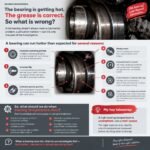

A temperature rise after installation can have several possible causes. Replacing the grease or adding more lubricant without investigating may not solve the actual problem.
Imagine this situation:
A maintenance team installs a new spherical roller bearing.
The machine starts running.
Within a short period, the bearing temperature begins increasing.
The team has four possible areas to investigate:
1. Operating clearance
Was the correct initial clearance selected? Was the remaining clearance after mounting measured correctly?
2. Bearing fit
Are shaft and housing fits appropriate for the application? Could excessive interference be reducing internal clearance?
3. Lubrication
Is the lubricant type correct? Is the quantity appropriate? Is the supply reaching the bearing properly?
4. Alignment and loading
Is the bearing subjected to misalignment, abnormal loading or unwanted axial restraint?
Here’s the important point:
A temperature rise is a symptom—not a root cause.
Before making adjustments, check the temperature trend, operating speed, load, lubrication condition and mounting records. Compare the readings with the bearing manufacturer’s limits and the machine’s established operating baseline.
Do not assume every temperature rise is abnormal, but never ignore a continuously rising temperature.
Let’s test your troubleshooting approach:
If a newly installed bearing starts heating up, what would you investigate FIRST?
A. Internal clearance after mounting
B. Lubrication quantity and supply
C. Shaft and housing fits
D. Alignment and operating load
Share your answer and, more importantly, your reasoning in the comments.
Good troubleshooting begins with asking the right question—not changing the first thing that comes to mind.