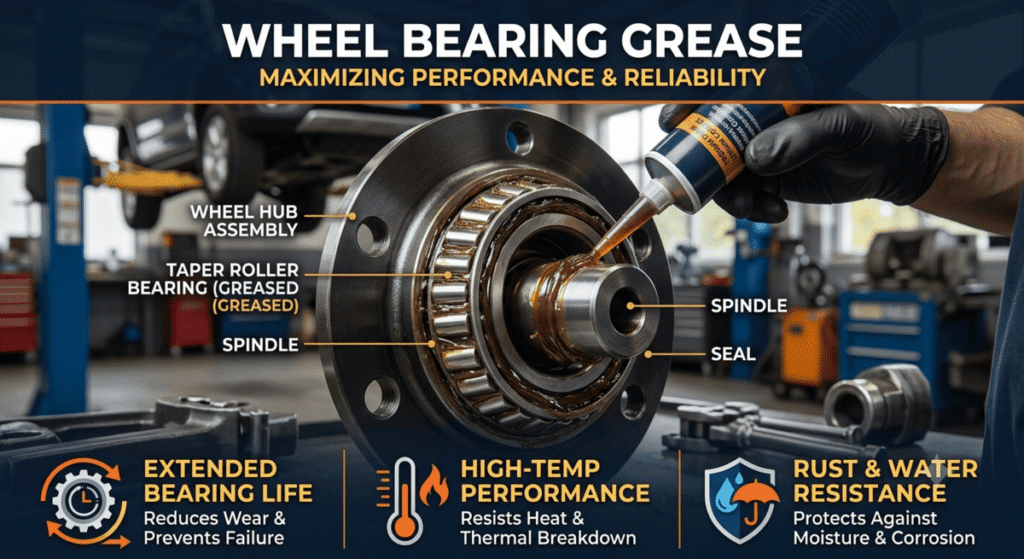

In every automotive application, wheel bearing grease plays a critical role in ensuring smooth wheel rotation, reducing friction, and protecting bearings from wear. Whether servicing passenger vehicles, commercial fleets, or heavy-duty equipment, selecting the correct grease can significantly improve bearing life and overall vehicle reliability.
What Is Wheel Bearing Grease?
Wheel bearing grease is a specially formulated lubricant designed to withstand the demanding conditions inside a wheel hub. Unlike standard lubricants, it must resist high temperatures, heavy loads, moisture, road contaminants, and continuous rotational stress. A quality wheel bearing grease creates a protective film between metal surfaces, minimizing friction while preventing premature bearing failure.
Modern wheel bearing greases are typically manufactured using lithium complex, calcium sulfonate, or synthetic base oils with advanced additive packages that enhance oxidation resistance, corrosion protection, and mechanical stability.
Why Choosing the Right Wheel Bearing Grease Is Important
Using the correct wheel bearing grease offers several advantages:
- Reduces metal-to-metal contact and friction
- Extends wheel bearing service life
- Protects against rust and corrosion
- Performs reliably under high-temperature conditions
- Resists water washout during wet-weather operation
- Helps lower maintenance costs and reduce unexpected downtime
For automotive workshops and fleet maintenance professionals, the right lubricant is an essential part of preventive maintenance.
Key Features to Look For
Not all greases are designed for the same operating conditions. When selecting wheel bearing grease, professionals should consider:
- High dropping point for elevated operating temperatures
- Excellent load-carrying capability
- Strong resistance to water and moisture
- Oxidation and thermal stability
- Compatibility with bearing materials and existing lubricants
- Long service intervals where applicable
Selecting a grease that meets OEM recommendations helps ensure reliable performance and avoids compatibility issues during maintenance.
Common Applications
Wheel bearing grease is widely used across multiple automotive sectors, including:
- Passenger cars
- SUVs and pickup trucks
- Commercial vehicles
- Trailers
- Agricultural machinery
- Construction and off-road equipment
- Industrial wheel assemblies
Each application may require a specific grease formulation depending on operating temperature, load, speed, and environmental exposure.
Best Practices for Wheel Bearing Maintenance
Even premium wheel bearing grease cannot compensate for poor maintenance practices. Automotive professionals should always clean bearings thoroughly before repacking, inspect races and rollers for wear or pitting, avoid mixing incompatible grease types, and apply the correct quantity according to manufacturer specifications. Over-greasing can generate excess heat, while insufficient lubrication may accelerate wear.
Routine inspection and timely relubrication remain essential for maximizing bearing reliability.
Final Thoughts
Choosing the right wheel bearing grease is an investment in vehicle safety, performance, and long-term reliability. High-quality grease minimizes friction, protects against contamination, and helps bearings perform efficiently under demanding operating conditions. For automotive professionals, using the correct lubricant alongside proper maintenance practices can reduce component failures, improve service intervals, and deliver dependable performance across a wide range of vehicles and equipment.
When evaluating wheel bearing grease, always consider operating conditions, OEM recommendations, and lubricant quality to achieve the best possible results for every application.